The cold weather is with us again here in Southern England. Well, we call it “cold”; others may differ – including those further North in the UK!
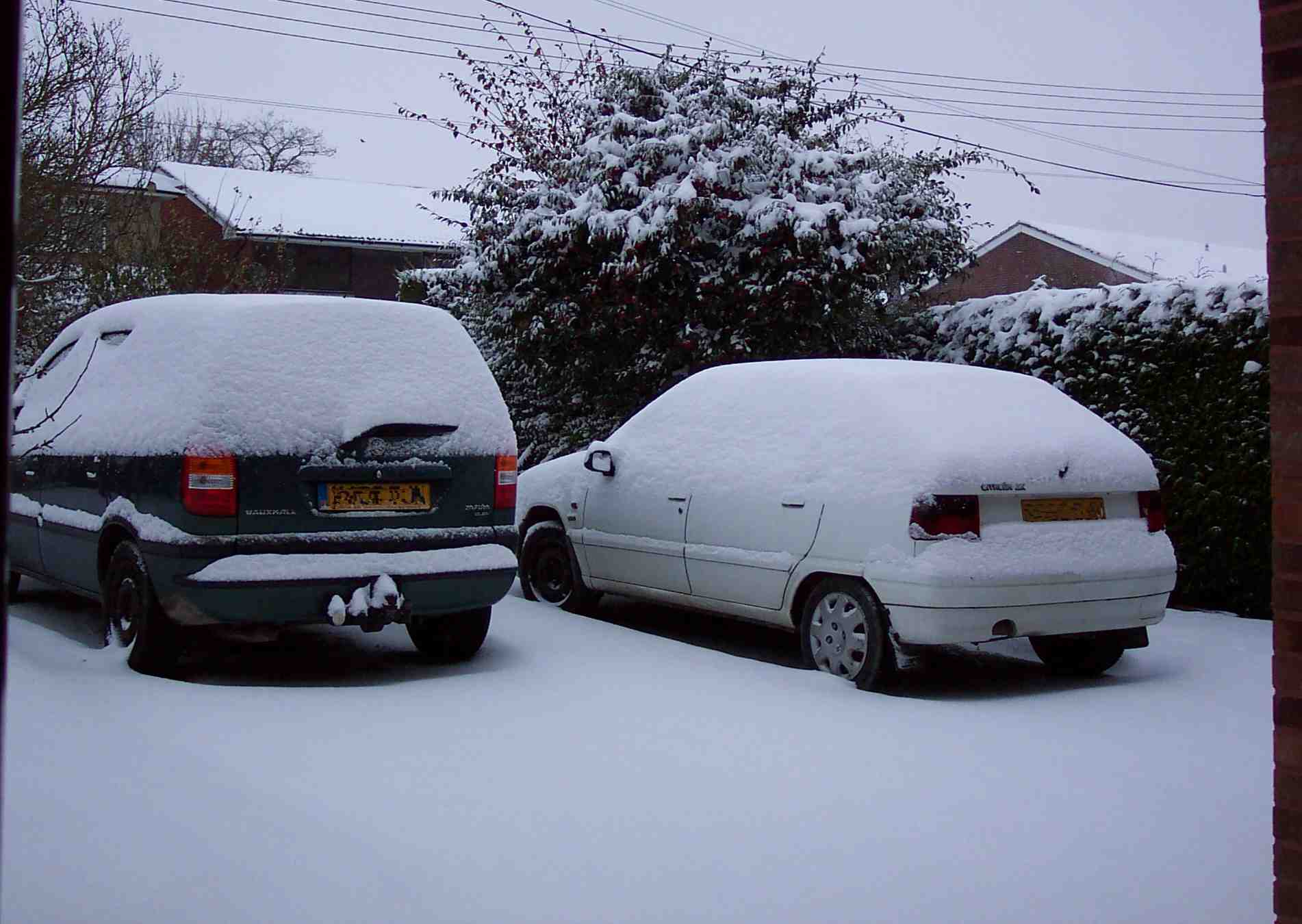
These conditions put extra strain on a car’s electrics, and can lead to starting problems.
So here are some Hot Tips for Cold Starting:
The important thing to remember is that, once the engine has stopped, there is nothing putting any power into the battery – therefore anything electrical at all that’s left on after the engine’s stopped will be flattening the battery.
So the first tip is:
Before you stop the engine:
Be sure to turn off everything electrical; lights, demister, blower, etc.
Close electric windows before stopping the engine.
The second tip is the converse of the first:
Do not switch anything on before the engine has started.
Start the engine as soon as possible after turning on the ignition – don’t wait with just the ignition on unless the car requires it(check handbook for details; eg, a diesel with glowplugs).
Tip for cars with manual transmission:
Depress the clutch pedal (“let the clutch out”) while starting.
This reduces the load on the starter and, hence the battery – thus increasing your chances of starting successfully
If you do need a “jump” start, remember that modern cars have lots of electronics in them; therefore be very sure to follow any directions in the handbook to avoid damage. If in doubt, leave this to a professional assistance service.
Do not be tempted to “jump” start a car using a so-called “Leisure” battery – as used for camping, caravans, etc. These are just not designed to give the huge “kick” required to start an engine (especially a diesel), and are likely to be damaged by it. (If you have a freshly-charged leisure battery, connecting it to the car battery for 5-10 minutes might charge the car battery sufficiently for a start; but be sure to disconnect it before starting and, again, follow any handbook directions).
Final tip, after a “jump” start:
Take the car for a good run – say, 15-20 minutes.
The reason you needed a jump start was that the battery was flat; if you don’t take steps to ensure that the battery gets well charged, the same will happen again!
More charge is generated at higher engine speeds (within reason), so the “open road” at “cruising speed” will be better than around town, if possible.
It is not recommended to leave the engine “idling” for long periods, nor to “rev” it while stationary. Again, be sure to follow any directions in the handbook to avoid damage and, if in doubt, seek professional advice.
Of course, if the car has persistent starting problems, it should be checked for faults in the battery and the charging and starting systems. Remember that batteries have a finite life.
Disclaimer: This post is presented in the hope that it may be of some use and/or interest; it is given “as-is” and entirely without any warranty of any sort whatsoever – any use of it is entirely at your own risk. If in doubt, seek advice from your vehicle provider, maintainer, or other reputable source.